
When Zafar Achakzai, a journalist in the restive Pakistani province of Balochistan, heard a loud, insistent knocking on his door just before sunrise on June 25, he did not quite know what to expect.
When he answered, he was met by about a dozen armed men, some in Pakistani paramilitary uniforms.
"They ordered me to come with them," the 21-year-old reporter told Al Jazeera by telephone. "When we were some distance from my home, they blindfolded me, and then I was held at some unknown place."
For hours, he remained in the dark. Eventually, men came to ask him questions, to confirm his identity and take down details about his work. It was then that he asked them why he had been taken.
"I was told that I use Facebook quite a lot. That is all that they said."
Achakzai was held without charge and interrogated repeatedly over the next three days. His interrogators, who refused to identify themselves, only said that they were concerned about several Facebook posts he had made that were critical of Pakistan's powerful military.
http://widgetcon.com
They specifically identified three posts that were critical of the Frontier Corps paramilitary force, which controls much of the law and order in Balochistan, where an armed separatist movement and increasing Taliban-linked violence has raged for over a decade.
"I responded by saying that the posts you are talking about come under my right to freedom of expression," he told Al Jazeera.
"They said, 'don't talk about rights here'."
He was released shortly after he was informed that an official case under the cybercrime act had been filed against him.
Achakzai's abduction came soon after the Federal Investigation Agency (FIA) issued dozens of summons to people across Pakistan asking them to explain their social media activity and charging them with posting material that was against the national interest.
Those targeted included political and social activists, as well as at least one other journalist.
Achakzai and dozen others were accused of maligning state institutions under the Pakistan Electronic Crimes Act (PECA), a law passed in August 2016.
PECA allows the government to issue takedown notices for any material deemed to be "in the interest of the glory of Islam or the integrity, security or defence of Pakistan … or public order, decency or morality".
The law was passed despite opposition from rights activists, who say the new legislation created overly broad categories for those who could be acted against, was against the principles of free speech, and left major definitions and rules vague or undeclared.
At the time, the government dismissed their concerns, saying the law was necessary to regulate a digital space that was not under any specific regulations or legislation until that point.
Activists now say that everything they were arguing is coming to pass.
Targeting dissent
Since the law came into effect, at least 147 people have been arrested and 194 cases registered under the law for various offences, including online sexual harassment, according to the interior ministry.
"When the law was passed, all the concerns we raised when the law was in the making - those all came true after enactment," said Nighat Dad, a lawyer and executive director of the Digital Rights Foundation (DRF). "All the provisions we said were vague that could be interpreted any way [the authorities] wanted, they have actually have done so."
Dad's organisation, based in the eastern city of Lahore, runs a cyber-harassment hotline, which helps women who are harassed online to file complaints under the law. The government's priority, however, appears to be to act against those expressing dissent, she says.
"I am seeing that the priority is not being given to those cases [of sexual harassment]; they are being given to cases that have to do with criticising the state."
Farieha Aziz, director at digital rights advocacy group Bolo Bhi, concurred, saying that the FIA and others appear to be targeting dissent.
"There is a fixed mindset regarding national security and 'national interest', and that is deeply embedded in our entire system," she said.
"The FIA says that people are being paid to say the most vile things about the army, and while that might be true, the line that has been blurred between raising questions and criticising, is very worrying."
International rights groups such as Amnesty International also say the crackdown has resulted in a shrinking of space for political and public expression.
"The crackdown on freedom of expression in Pakistan is extremely worrying, as it is elsewhere in South Asia. One of the hopes of a return to civilian rule in Pakistan was a restoration of people's rights. However, what we are seeing is a shrinking of civic space that is even worse than under [military rule]," said Omar Warraich, the deputy South Asia director at Amnesty.
"People are being arbitrarily detained and even disappeared for peacefully expressing their views, creating a climate of fear that runs counter to the promises of greater political freedoms that the PML-N government made."
Abducted, tortured, forced into exile
One of the first of those to disappear was Asim Saeed, an IT manager based in Singapore who was visiting his home in the eastern Pakistani city of Lahore last winter.
He was forcibly picked up from his home on the afternoon of January 6, and thrown into an unmarked pick-up truck by men in plain clothes.
"They put handcuffs on me and a hood over my head," he said.
After a few minutes, during which Saeed says he was slapped and his mobile and other belongings were taken from him, they arrived at an undisclosed location.
"They stripped me naked and made me change into a prisoner's uniform. There were other people in the cells there as well," he said. "I asked if I could keep my underwear on, and they said no."
After he had changed, he was once again handcuffed, with additional cuffs attached to his legs. He was blindfolded and taken to a basement, sat down at a desk and handed a blank sheet of paper.
"I was told to write the story of my life. Everything about myself, when I was born, where I went to school, everything."
It took a few hours, he said: "In that building, you lose sense of time."
What followed was three weeks of daily interrogation and torture, Saeed says.
"They would keep me blindfolded and tie my hands above my head," he said. "And then they would hit me on my back and legs … with a leather strap. Once, I fell unconscious, I fell off the contraption."
Every day, they would ask him about his political beliefs and accuse him of running a Facebook page that posted content critical of the Pakistani military, which has ruled the country for roughly half of its 70-year history.
"No matter what answer I gave, I was slapped for every answer."
Saeed was one of five social media activists to be picked up within days of each other in early January. The men would later be accused of posting blasphemous material online, a charge that can carry both a judicial death sentence and the threat of murder by a mob in Pakistan.
The Pakistani government has repeatedly denied having any role in their disappearances. All of them were released by the end of January.
Saeed says he was held by members of an intelligence agency alongside at least two of those who were abducted during that time. During his three weeks of incarceration, he says he suffered a fracture in his right hand, a burst eardrum and bruises all over his body.
"After you are tortured, you realise there is nothing else that can be done to you - so you become a bit brave," he said. "I asked why are you doing this; put us in front of a court if we have committed a crime."
But there was no answer.
Saeed and several others were released from custody on January 27, after signing a confession and promising never to criticise Pakistan's intelligence agencies again, or to speak to the media.
The next day, he fled back to Singapore, fearful that a mob may kill him over the blasphemy accusations that spread during the time he was in custody. At the time of Saeed's incarceration, his family told Al Jazeera they had received multiple death threats by phone and over SMS.
Government defends policy
The disappearances in January, and the subsequent crackdown by the FIA, has had a chilling effect on freedom of expression in Pakistan, say rights activists.
"I absolutely believe that the disappearances were aimed at silencing critiques," said Dad, of the DRF.
"We clearly have seen self-censorship. We see people who were very vocal and who have bold opinions about the state machinery and the things they are doing, they have tamed down their voices. There is a lot of self-censorship. Lots of people reached out to us, especially political bloggers and activists, asking us if they say something, whether it comes under PECA."
The government, however, disagrees with that assessment, claiming that authorities have been ordered to show restraint when taking on cases of dissent using the law.
"We have a policy, that despite the law, that until there is not a post that is at a very extreme level, then we neither allow an inquiry nor authorise any arrests," Talal Chaudhry, minister of state for the interior, told Al Jazeera.
Article 19 of Pakistan's Constitution
"Every citizen shall have the right to freedom of speech and expression, and there shall be freedom of the press, subject to any reasonable restrictions imposed by law in the interest of the glory of Islam or the integrity, security or defence of Pakistan or any part thereof, friendly relations with foreign States, public order, decency or morality, or in relation to contempt of court, 30 [commission of] 30 or incitement to an offence."
Asked to define what that "extreme level" would be, Chaudhry said it would entail harsh criticism of the state's institutions, including the military, or material deemed to be blasphemous.
"As a policy and as a political party, we believe that there should be freedom of expression. But we have to look at this very carefully. First [there are] our religious beliefs … and second, if a military force is fighting against terrorism, and people are then [criticising] the martyrs of that force and you do not tackle it, then I think the force will be disheartened."
Asked if the law and its application have an effect on free speech, the government is clear in its stance.
"It is very important to understand that in Pakistan … it is very clearly mentioned in Article 19 of the 1973 [constitution] that freedom of expression is conditional. It is conditional upon four or five things, including [not criticising] state institutions, friendly countries and some religious beliefs."
For activists who are facing the full force of the law, however, the implications are clear.
"After all of this happened, of course I have been forced to change my online behaviour," said Achakzai, the journalist. "Anything to do with raising questions about the government or law enforcement agencies, I have stopped doing that."
Saeed, who has applied for asylum in the United Kingdom over fears for his family's safety, says he, too, has started to self-censor, despite being in a foreign country.
"I could only stay [in Singapore] as long as the job existed. If it ended, even after five years, I would have to go back to Pakistan, and these allegations will be with me my whole life.
"I would have to go back to Pakistan, but I cannot do that. Killing me is a ticket to heaven for some people."

 A Bloomberg interview has revealed Old Mutual Gold & Silver Fund has set aside roughly 11 million USD from its holdings since spring of this year to purchase the world’s most popular cryptocurrency, bitcoin. It’s another feather in the decentralized currency’s cap, even as debate rages as to whether it will ever supplant gold’s tradition of being a hedge against tough economic times.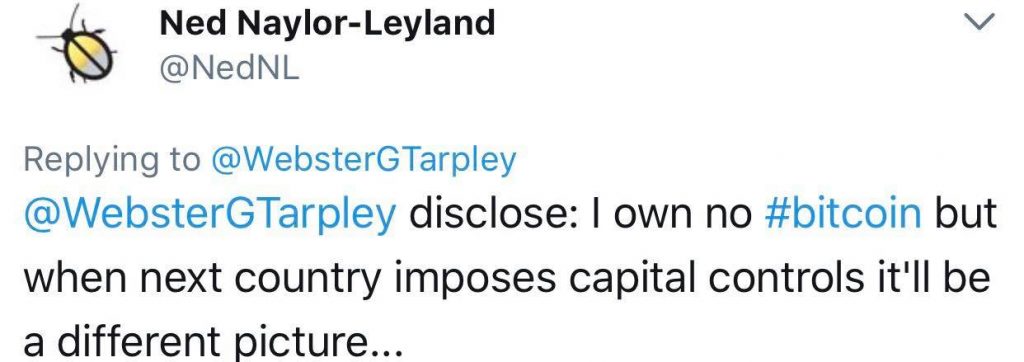
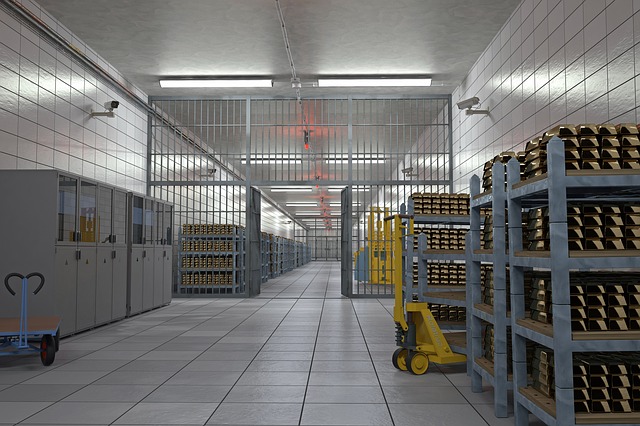 It’s a novel approach to bitcoin, for sure. Crypto maximalists suggest it’s simply a matter of time before the digital currency overtakes gold’s position. And as well as bitcoin has done in less than a decade, the precious metal has a four millennia headstart.
Something on the order of over 5 billion ounces presently exit, and with an ounce trading above 1,200 USD, that pegs it at a 7 trillion USD market cap, close to 100 fold better than present bitcoin valuations.
Still, the better bet seems to be understanding a larger point: the metal’s limitations were the inspiration behind bitcoin’s creation in terms of scarcity, mining, and utility. They’re not mutually exclusive though: both are preferable to the whims of government fiat, sound money advocates urge.
It’s a novel approach to bitcoin, for sure. Crypto maximalists suggest it’s simply a matter of time before the digital currency overtakes gold’s position. And as well as bitcoin has done in less than a decade, the precious metal has a four millennia headstart.
Something on the order of over 5 billion ounces presently exit, and with an ounce trading above 1,200 USD, that pegs it at a 7 trillion USD market cap, close to 100 fold better than present bitcoin valuations.
Still, the better bet seems to be understanding a larger point: the metal’s limitations were the inspiration behind bitcoin’s creation in terms of scarcity, mining, and utility. They’re not mutually exclusive though: both are preferable to the whims of government fiat, sound money advocates urge.
 South Punjab comes on top in agricultural economy as it has 96% share in cotton production in Punjab and 80% in the entire country as well as pays more taxes than the industrial hub of Faisalabad, emphasized Malik Asrar Ahmed Awan, President of the Multan Chamber of Commerce and Industry.
He was giving a briefing to the visiting probationary officers of grade-18 of the 24th Mid-career Management Course of the National Institute of Management, Karachi.
Awan pointed out that south Punjab offered great opportunities for investment in the areas of agriculture, dairy products, livestock, fruit and vegetable processing and packaging. He cited the surveys conducted by the World Bank and its financing arm International Finance Corporation that ranked south Punjab second in the country for making investment.
South Punjab comes on top in agricultural economy as it has 96% share in cotton production in Punjab and 80% in the entire country as well as pays more taxes than the industrial hub of Faisalabad, emphasized Malik Asrar Ahmed Awan, President of the Multan Chamber of Commerce and Industry.
He was giving a briefing to the visiting probationary officers of grade-18 of the 24th Mid-career Management Course of the National Institute of Management, Karachi.
Awan pointed out that south Punjab offered great opportunities for investment in the areas of agriculture, dairy products, livestock, fruit and vegetable processing and packaging. He cited the surveys conducted by the World Bank and its financing arm International Finance Corporation that ranked south Punjab second in the country for making investment.
 During China’s 19th Party Congress in October, President Xi Jinping placed innovation at the center of China’s national strategy. His remarks called for building China into a “science and technology superpower,” particularly as an “aerospace superpower” and “cyber superpower.” He highlighted notable achievements, including Mozi, the world’s first quantum satellite, and China’s space lab, Tiangong.
His remarks underscored that, under his leadership, China has pursued a strategy of innovation-driven development and sought to leverage the potential of the internet, big data and artificial intelligence (AI). If successful, China’s emergence as a leading power in innovation could shift the strategic balance.
During China’s 19th Party Congress in October, President Xi Jinping placed innovation at the center of China’s national strategy. His remarks called for building China into a “science and technology superpower,” particularly as an “aerospace superpower” and “cyber superpower.” He highlighted notable achievements, including Mozi, the world’s first quantum satellite, and China’s space lab, Tiangong.
His remarks underscored that, under his leadership, China has pursued a strategy of innovation-driven development and sought to leverage the potential of the internet, big data and artificial intelligence (AI). If successful, China’s emergence as a leading power in innovation could shift the strategic balance.  A federal grand jury has indicted the man accused of driving a truck along a pedestrian path in Lower Manhattan, killing 8 people and injuring 12 on Halloween, on charges of terrorism and murder.
A grand jury handed down a 22-count indictment against Sayfullo Saipov, 29, of Paterson, New Jersey, who police say was inspired by ISIS videos to plan an attack in the United States. The goal: to “kill as many people as he could.”
The charges in Tuesday’s indictment include:
A federal grand jury has indicted the man accused of driving a truck along a pedestrian path in Lower Manhattan, killing 8 people and injuring 12 on Halloween, on charges of terrorism and murder.
A grand jury handed down a 22-count indictment against Sayfullo Saipov, 29, of Paterson, New Jersey, who police say was inspired by ISIS videos to plan an attack in the United States. The goal: to “kill as many people as he could.”
The charges in Tuesday’s indictment include:
 1. Pollution: Pollution of air, water and soil require millions of years to recoup. Industry and motor vehicle exhaust are the number one pollutants. Heavy metals, nitrates and plastic are toxins responsible for pollution. While water pollution is caused by oil spill, acid rain, urban runoff; air pollution is caused by various gases and toxins released by industries and factories and combustion of fossil fuels; soil pollution is majorly caused by industrial waste that deprives soil from essential nutrients.
2. Global Warming: Climate changes like global warming is the result of human practices like emission of Greenhouse gases. Global warming leads to rising temperatures of the oceans and the earth’ surface causing melting of polar ice caps, rise in sea levels and also unnatural patterns of precipitation such as flash floods, excessive snow or desertification.
1. Pollution: Pollution of air, water and soil require millions of years to recoup. Industry and motor vehicle exhaust are the number one pollutants. Heavy metals, nitrates and plastic are toxins responsible for pollution. While water pollution is caused by oil spill, acid rain, urban runoff; air pollution is caused by various gases and toxins released by industries and factories and combustion of fossil fuels; soil pollution is majorly caused by industrial waste that deprives soil from essential nutrients.
2. Global Warming: Climate changes like global warming is the result of human practices like emission of Greenhouse gases. Global warming leads to rising temperatures of the oceans and the earth’ surface causing melting of polar ice caps, rise in sea levels and also unnatural patterns of precipitation such as flash floods, excessive snow or desertification. 